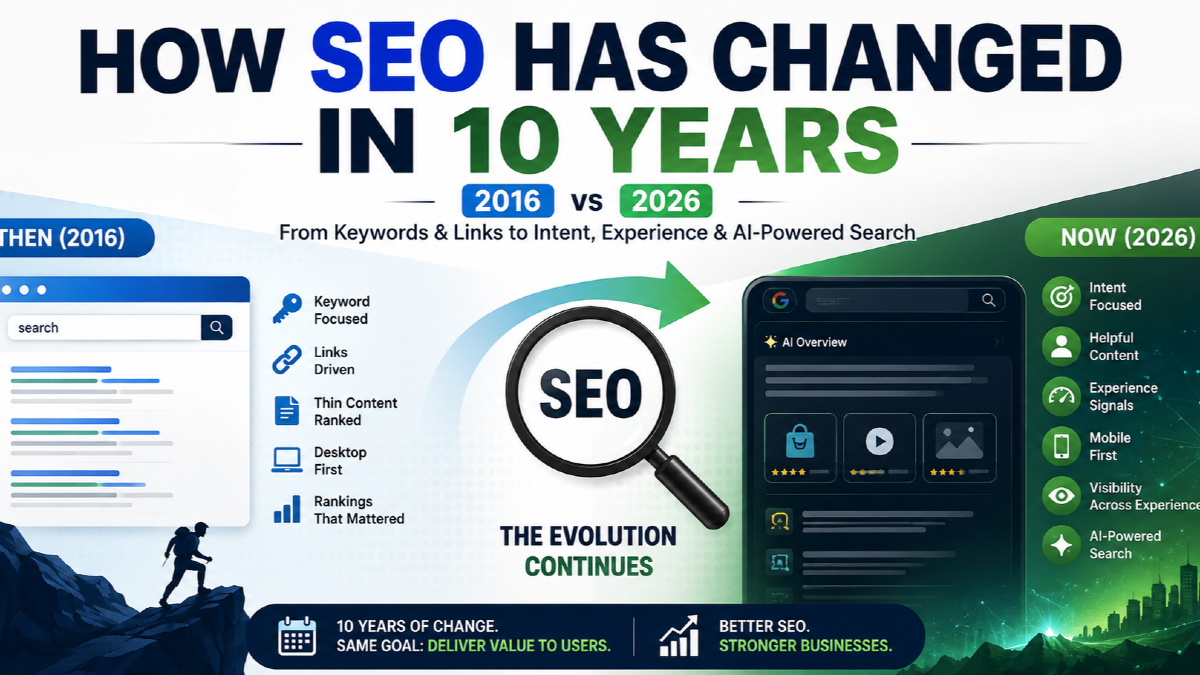
If you worked in SEO in 2016 and opened a Google Search results page in 2026, many fundamentals would still look familiar. Google still needs to discover pages, understand their content, evaluate relevance and decide which results may best answer a search.
But the way we actually do SEO has changed significantly.
Ten years ago, SEO strategies were often built around keyword groups, individual landing pages, backlinks, desktop rankings and relatively predictable organic listings. Today, search intent, mobile-first crawling, site architecture, page experience, product data, multimedia content and AI-powered search experiences all influence how we approach organic visibility.
The biggest change is not that keywords, links or technical SEO stopped working.
Google became much better at understanding what people mean, how information relates, whether content provides useful value and how different types of information should be presented in Search.
I have worked in SEO through both periods. The practical difference I notice most is that SEO has moved away from optimizing isolated elements and toward building pages and websites that make sense as complete information systems.
SEO in 2016 vs 2026: The Short Answer
SEO in 2016 was already far more advanced than the keyword-stuffing SEO of the early 2000s. Google had introduced major improvements such as Panda, Penguin and Hummingbird years earlier, so low-quality content and manipulative links were already risky strategies.
But SEO workflows were still much more keyword-centric than they are today.
A typical project might start by collecting hundreds or thousands of keywords, separating them into groups and deciding which page should target each group. Rankings for specific keywords were often one of the main measures of progress.
That approach has gradually changed.
In 2026, keywords remain valuable because they reveal how people search. But the stronger question is no longer simply:
“Which keyword should this page rank for?”
It is:
“What search need should this page satisfy, and does it deserve to be the best page on our website for that need?”
Search itself has changed too. Users may encounter standard organic results, featured snippets, images, videos, product listings, local results, AI Overviews and other search features before deciding what to click.
SEO therefore has a broader job in 2026: create useful, accessible and differentiated information that search systems can understand and users can trust across multiple search experiences.
SEO Then vs Now: Quick Comparison
| SEO Area | 2016 | 2026 |
|---|---|---|
| Keywords | Heavy focus on individual keywords and keyword groups | Keywords remain useful, but intent and page-level topic ownership matter more |
| Search intent | Considered, but often secondary to keyword targeting | Central to page planning and content structure |
| Content | Publishing more keyword-targeted pages was common | Useful, original and differentiated content is a stronger long-term approach |
| Backlinks | Link quantity and authority metrics often dominated campaigns | Relevant editorial links remain useful while manipulative link schemes carry significant risk |
| Mobile | Mobile optimization was becoming a major requirement | Mobile-first crawling and indexing are the normal environment |
| Technical SEO | Crawlability, redirects, canonicals and site structure were major concerns | Those remain important, with added complexity from JavaScript, large platforms, rendering and faceted sites |
| Page experience | Speed and mobile usability were growing concerns | User experience includes modern performance measures such as LCP, INP and CLS |
| Structured data | Growing adoption | Useful for helping Google understand eligible content and enabling supported search features |
| AI | Not part of everyday SEO content workflows | Used in research and production, while generative AI is also part of the search experience |
| Search results | Organic listings remained the dominant SEO reference point | Visibility can appear across traditional listings, rich experiences, products, images, video and AI-powered features |
| Measurement | Rankings, sessions and organic traffic dominated reporting | Visibility needs to connect with queries, landing pages, conversions, revenue and business outcomes |
1. SEO Moved From Keyword Matching Toward Intent and Meaning
One of the clearest changes over the last decade is how we think about keywords.
Keyword research still matters in 2026. Search queries tell us what people want, which language they use, how specific their needs are and where commercial demand exists.
What changed is how literally we need to translate those keywords into pages.
Years ago, it was common to find websites creating separate pages for small keyword variations because each phrase was treated as a separate ranking opportunity.
For example, a business might create individual pages around variations such as:
- SEO consultant;
- SEO consulting services;
- SEO consultant services;
- hire SEO consultant;
- professional SEO consultant.
If all those searches represent essentially the same need, creating five weak pages can create duplication rather than additional value.
Google's language-understanding systems have become considerably more sophisticated. BERT, introduced to Google Search in 2019, was one important development in Google's ability to understand language and context.
The practical lesson is not that keywords have disappeared.
It is that a well-built page can satisfy a group of closely related searches without mechanically repeating every keyword variation.
I now approach keyword research primarily as a way to understand demand, intent, subtopics and page ownership rather than as a checklist of phrases that must each receive their own URL.
That same principle should carry into on-page SEO optimization: use search language naturally, but organize the page around what the visitor is actually trying to accomplish.
2. Content Quantity Became Less Valuable Than Useful, Original Content
There was a period when publishing more pages could feel like progress by itself.
Find another keyword. Write another article. Create another landing page. Repeat.
That model becomes weak when every new page simply rearranges information that already exists elsewhere.
Modern SEO creates a much harder question:
What does this page contribute that deserves to exist?
That contribution might be:
- first-hand experience;
- original research;
- product knowledge;
- a better explanation of a difficult problem;
- real comparisons;
- examples from practical work;
- proprietary business data;
- expert analysis;
- information competitors have overlooked.
This has become even more relevant as generative AI makes generic content inexpensive to produce.
If hundreds of websites can generate nearly identical summaries of the same topic, publishing another generic summary creates little competitive advantage.
There is also no useful universal word-count target for SEO.
A page should be long enough to satisfy its purpose. A product category may need relatively concise supporting information, while a complex technical guide may require several thousand words.
Length is not a substitute for usefulness.
3. Link Building Changed From Volume to Risk, Relevance and Editorial Value
Backlinks have not disappeared from SEO.
Google still uses link analysis, including PageRank, as part of its ranking systems. What has changed is the sustainability of trying to manufacture rankings through manipulative links.
Older SEO campaigns frequently concentrated heavily on numbers:
- How many backlinks did we build?
- How many referring domains were added?
- What authority score does the linking website have?
Those numbers can provide information, but they can also encourage the wrong behaviour.
Google's spam policies explicitly address link schemes intended to manipulate rankings.
That makes the better objective much simpler:
Build something people have a legitimate reason to reference.
This could be original research, a useful tool, expert commentary, unique product information, a strong resource or a brand that naturally receives mentions from relevant websites.
The number of links required cannot be reduced to a universal target. Competitive requirements vary by query, industry, website and existing authority.
4. Mobile SEO Became the Default, Not a Separate Strategy
In 2016, mobile SEO was often discussed as a distinct initiative.
Businesses were still asking whether they needed responsive websites, separate mobile experiences or additional investment in mobile usability.
Google announced its move toward mobile-first indexing in 2016. The transition eventually made the mobile version of a website the normal basis for Google's crawling and indexing systems.
By 2026, thinking of mobile SEO as a separate project makes little sense.
Mobile is simply part of SEO.
Your important content, internal links, structured information and functionality need to remain accessible in the mobile experience.
This is especially important for ecommerce websites where filters, product variants, navigation elements and supporting content sometimes behave differently across screen sizes.
5. Page Experience Became Broader Than Page Speed
Website speed mattered long before Core Web Vitals existed, but our ability to measure real user experience has become more structured.
The current Core Web Vitals focus on three areas:
- Largest Contentful Paint (LCP) for loading performance;
- Interaction to Next Paint (INP) for responsiveness;
- Cumulative Layout Shift (CLS) for visual stability.
INP replaced First Input Delay (FID) as a Core Web Vital in March 2024.
This correction matters because many older SEO articles and audit templates still reference FID as though it were a current Core Web Vital.
There is also a larger lesson here.
A perfect performance score does not guarantee rankings.
Core Web Vitals should not be treated as a game where improving one number automatically moves a page several positions higher.
A fast website with weak content does not become the best search result merely because it loads quickly.
The objective is a website that is useful, accessible, stable and pleasant to use, with performance being one part of that experience.
6. Technical SEO Became More Important as Websites Became More Complex
The basic technical requirements of SEO have not changed dramatically.
Search engines still need to discover, crawl, render, understand and index pages.
What changed is the complexity of the websites we ask them to process.
Modern websites may depend heavily on JavaScript, client-side rendering, APIs, headless architectures, dynamic filters and large content-management platforms.
Large ecommerce websites add another layer of difficulty through:
- faceted navigation;
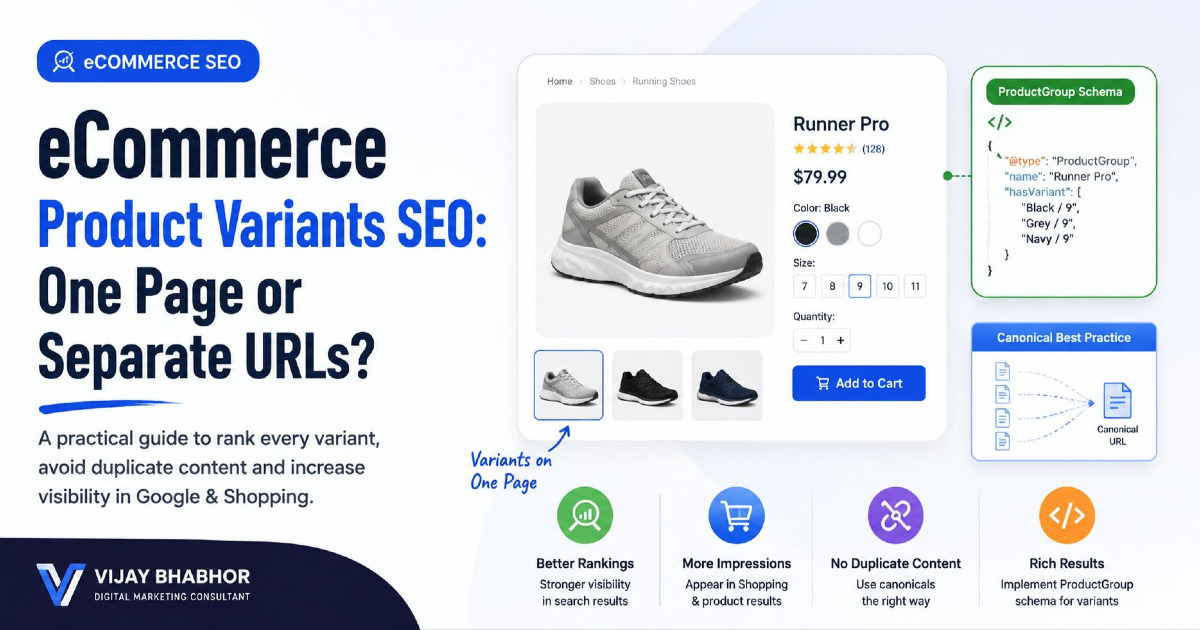
- product variants;
- pagination;
- duplicate URLs;
- canonicalization;
- out-of-stock products;
- large XML sitemaps;
- dynamic category combinations.
A website can contain excellent content and still perform poorly if important pages are difficult for search engines to discover or interpret.
This is why technical SEO is not merely a developer concern. It determines whether the content and products a business creates can participate properly in organic search at all.
7. Search Results Expanded Beyond Ten Blue Links
Ranking reports used to provide a reasonably straightforward picture of search visibility.
If your website moved from position eight to position three for an important keyword, that improvement was easy to understand.
Modern search results are more complicated.
Depending on the query, users may encounter:
- standard organic listings;
- featured snippets;
- images;
- videos;
- local results;
- shopping and product experiences;
- knowledge-based results;
- AI Overviews;
- other interactive search features.
This means ranking position alone no longer describes the full search opportunity.
An ecommerce brand, for example, may gain visibility through a category page, individual product, image, video or shopping surface depending on what the shopper searches for.
Modern SEO therefore needs to think about search visibility, not just a list of traditional rankings.
8. AI Overviews and AI Mode Changed How Searchers Consume Answers
AI is one of the biggest visible differences between Search in 2016 and Search in 2026.
Google now incorporates generative AI experiences such as AI Overviews and AI Mode into Search.
For website owners, this naturally raises a question:
Do we need a completely different type of SEO for AI search?
Google's guidance does not support abandoning normal SEO fundamentals.
Pages still need to be crawlable and indexable. Content still needs to be useful. Internal linking, page experience, images, structured information and other established practices remain relevant.
There is no special “AI Overview schema” that guarantees inclusion, nor does a website need an entirely separate technical SEO architecture solely for AI Mode.
What AI search does increase is the pressure on commodity content.
If your page merely repeats facts already available across hundreds of websites, it becomes difficult to explain why a search system or user should prefer your version.
Content becomes more defensible when it contains something genuinely useful, such as:
- first-hand expertise;
- original observations;
- unique product knowledge;
- real comparisons;
- specific examples;
- original images or video;
- data that comes from your business or research;
- clear answers that resolve the searcher's actual problem.
The practical strategy is not to create one set of pages for Google and another for AI.
Build information that is understandable, accessible and valuable enough to work across the different ways Search can present it.
9. AI Changed Content Production, But It Did Not Remove the Quality Requirement
Generative AI also changed the production side of SEO.
Research, outlining, content analysis, data organization and drafting can now happen much faster.
That speed creates both an opportunity and a problem.
Google does not say that content automatically violates its guidelines because AI helped create it.
The problem appears when automation is used to generate large amounts of low-value content primarily to manipulate search rankings.
The same principle would apply if thousands of weak pages were produced manually.
The production method is not a substitute for quality.
For serious SEO work, AI output should still be checked for:
- factual accuracy;
- outdated information;
- unsupported claims;
- duplication;
- missing context;
- brand accuracy;
- actual usefulness to the intended reader.
Publishing faster is useful only when what you publish deserves to exist.
10. SEO Measurement Changed From Rankings Alone to Search Visibility and Business Outcomes
Rankings still matter. Organic clicks still matter. Search traffic still matters.
But none of them should be interpreted alone.
A modern SEO report should help explain the relationship between:
- search impressions;
- query coverage;
- organic clicks;
- landing-page visibility;
- engagement;
- conversions;
- leads or transactions;
- revenue where measurable.
This becomes especially important for ecommerce.
Growing organic sessions by 30% is not necessarily a successful outcome if the additional traffic comes from informational searches that rarely contribute to product discovery or sales.
Likewise, losing clicks on some informational queries does not automatically mean the entire SEO program is failing.
Google includes traffic from AI features such as AI Overviews within Search Console's overall web performance reporting rather than providing a separate universal “AI ranking” metric.
SEO reporting therefore needs to stay connected to what Search Console actually measures instead of inventing new metrics simply because AI is involved.
What Has Not Changed in SEO?
With every major change in Search, someone declares that SEO has been replaced.
Looking across the last decade suggests something different.
The interface changes. Search systems improve. Tactics lose effectiveness. New formats appear.
But several fundamentals remain remarkably stable.
Search Engines Still Need to Discover Your Pages
If an important page cannot be crawled or discovered through your website architecture, its content quality alone cannot solve the problem.
A Page Still Needs a Reason to Rank
A search engine needs to understand why your page is relevant to a particular need and why it may be useful compared with alternatives.
Useful Content Still Matters
Technology has changed how content is processed and presented, but the user still wants a useful answer, product, service or solution.
Links Still Help Connect the Web
Internal links help establish relationships and navigation within a website, while external links remain part of how search systems understand pages and the broader web.
Site Architecture Still Matters
A logically structured website makes it easier for users and search engines to understand which pages exist and how they relate.
Technical Problems Can Still Hold Back Strong Content
Incorrect canonicals, accidental noindex directives, rendering problems, broken internal links and poor URL management can still undermine otherwise strong SEO work.
The User Is Still the Final Audience
Search technology may become more sophisticated, but businesses ultimately need visibility because they want to reach people.
That has not changed.
What These SEO Changes Mean for eCommerce Websites in 2026
eCommerce SEO shows particularly well why modern SEO cannot be reduced to keywords and backlinks.
An online store may contain thousands of categories, products, variants, images and filter combinations. Organic performance depends on how these elements work together.
Category Pages Need Clear Search Intent
A category should not exist simply because a keyword has search volume.
The query should represent a useful shopping destination.
For example, shoppers searching for a broad product type may need a collection page, while someone searching for a specific model or design may be better served by an individual product.
Understanding that distinction is a major part of modern eCommerce SEO.
Product Information Needs to Be Useful Beyond Manufacturer Data
Copying the same manufacturer description used by dozens of retailers gives a store very little informational differentiation.
Where possible, product pages should contain accurate information that genuinely helps someone decide whether the product is suitable.
Depending on the product, that could include:
- materials;
- dimensions;
- fit;
- compatibility;
- care instructions;
- usage guidance;
- shipping information;
- original photography;
- video;
- customer questions.
Product Data Matters Across Search Experiences
Search visibility for ecommerce products is not limited to a traditional organic product-page listing.
Accurate product information can support Google's understanding of products and their eligibility across relevant shopping experiences.
Structured data can help communicate product information in a machine-readable format, but adding schema does not guarantee higher rankings.
Faceted Navigation Needs Control
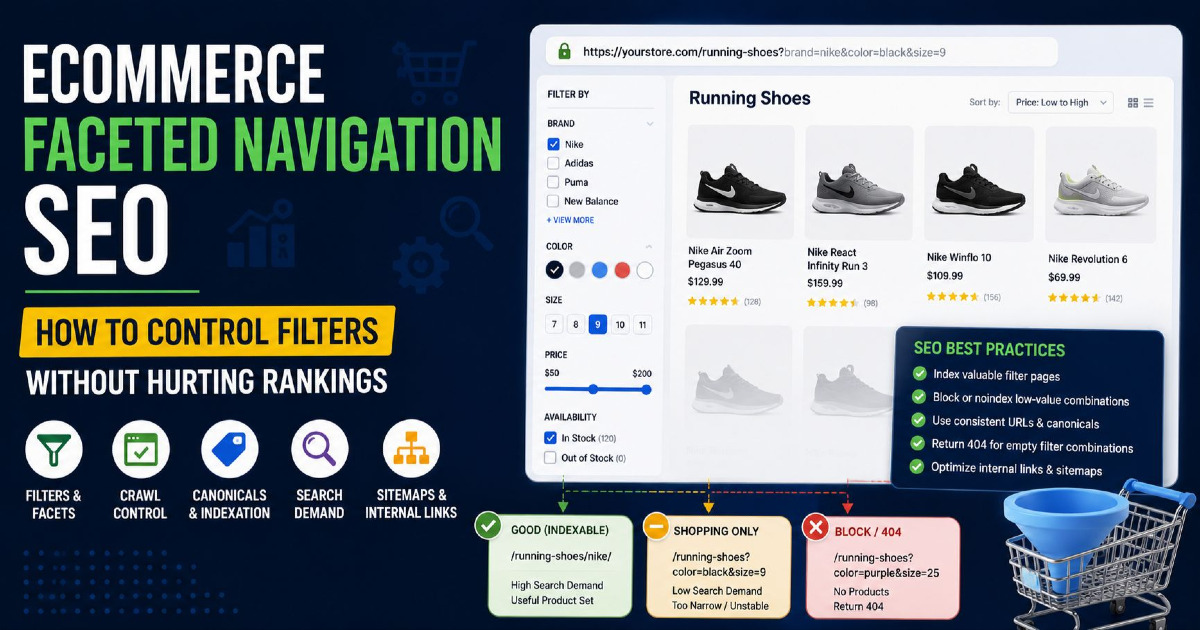
Filters are useful to shoppers but can generate huge numbers of URL combinations.
A store with filters for size, colour, brand, price, material and style can accidentally create thousands or millions of crawlable combinations with little unique search value.
Modern ecommerce SEO therefore requires close coordination between SEO, development and merchandising.
Images Are Search Assets Too
For visual products such as fashion, jewellery, furniture and home decor, images are not merely decoration for a product page.
High-quality original imagery can help users understand the product and can also expand how products are discovered through visual search experiences.
The broader lesson is simple: ecommerce SEO now operates across content, catalog structure, technical accessibility, product data and visual assets rather than existing as a separate keyword activity.
Old SEO Tactics to Stop Using in 2026
| Old Approach | Why It Is Weak | Modern Replacement |
|---|---|---|
| Exact-match keyword stuffing | Creates unnatural pages without improving usefulness | Use natural language and satisfy the complete search intent |
| One page for every keyword variation | Creates duplication and competing URLs | Group searches by genuine intent and assign clear page ownership |
| Mass low-value content | Adds pages without adding meaningful information | Publish fewer pages with differentiated value |
| Manipulative link building | Creates spam risk and weak long-term value | Earn relevant links through useful resources, expertise and genuine visibility |
| Desktop-first SEO | Does not reflect Google's mobile-first environment or user behaviour | Make mobile accessibility part of the default website experience |
| Chasing one Core Web Vitals score | Performance scores alone do not determine search success | Improve real user experience while maintaining content quality and relevance |
| Adding schema purely to rank higher | Structured data does not guarantee ranking improvements | Use supported structured data accurately where it helps describe eligible content |
| Publishing AI content without review | Can introduce factual errors, duplication and generic information | Use AI where useful, then verify and add genuine expertise or original value |
| Ranking reports without business metrics | Visibility without outcomes can hide weak commercial performance | Connect search performance with conversions, leads, transactions and revenue where appropriate |
How to Build an SEO Strategy That Survives the Next Change
Trying to predict Google's next feature is less useful than building an SEO system that does not depend on one temporary tactic.
I would prioritize the following principles.
Give Every Important Page a Clear Purpose
Know which search need each page owns. Avoid creating several URLs that solve the same problem simply because keyword variations exist.
Keep Important Content Technically Accessible
Regularly review indexing, canonicals, internal links, rendering, redirects and other issues that can prevent search engines from processing important pages correctly.
Create Information Competitors Cannot Easily Copy
Use your experience, products, customers, research, processes, images, data and expertise wherever they can make the page more useful.
Use Search Data to Improve Existing Pages
Search Console can reveal new queries, declining pages, changes in impressions and opportunities that did not exist when a page was originally published.
SEO should therefore include updating existing content, not just creating new URLs.
Audit the Whole System Periodically
Websites change constantly. Templates are redesigned, products are removed, redirects accumulate and internal linking changes.
A periodic website SEO audit can identify problems that individual content updates will not reveal.
Final Takeaway: SEO Changed, but the Objective Did Not
SEO in 2026 looks very different from SEO in 2016, but many of its foundations survived the decade.
Keywords still help us understand demand. Links still connect information and provide signals. Technical SEO still determines whether pages can be discovered and processed. Content still needs to satisfy a real need.
What changed is the level of sophistication around those fundamentals.
Google has become better at understanding language and intent. Mobile became the default environment. Websites became technically more complicated. Search results expanded beyond traditional organic listings. Generative AI created new ways to produce information and new ways for users to consume it.
That makes modern SEO less about finding the latest isolated trick and more about building a website where search intent, useful content, technical accessibility and business value work together.
For ecommerce businesses, that means SEO can no longer sit separately from catalog structure, product information, merchandising, development and customer experience.
If your organic growth has stalled or your store has accumulated technical and content problems over time, my eCommerce SEO services focus on identifying those constraints and building a clearer organic growth strategy around the products and categories that matter to the business.
Frequently Asked Questions
How has SEO changed over the last 10 years?
SEO has moved from a more keyword-centric approach toward stronger search-intent understanding, useful content, mobile-first indexing, greater technical complexity and broader search experiences. AI Overviews and AI Mode have changed how some answers are presented, but crawlability, relevance, useful content and site structure remain important.
Does keyword research still matter in 2026?
Yes. Keyword research remains useful for understanding demand, terminology and search behaviour. The difference is that closely related keywords should usually be evaluated by intent rather than automatically receiving separate pages.
Do backlinks still matter for SEO?
Links remain part of Google's ranking systems and help search engines understand relationships across the web. However, manipulative link schemes intended to influence rankings violate Google's spam policies. Relevance, editorial value and legitimate reasons for earning links matter more than chasing arbitrary backlink counts.
Is SEO still relevant with AI Overviews and AI Mode?
Yes. Google's guidance for its AI search experiences continues to point website owners toward established SEO practices. Pages still need to be accessible, indexable and useful. There is no separate AI-only technical optimization system required to participate in these search experiences.
Does AI-generated content rank on Google?
Using generative AI does not automatically make content spam. The problem is using automation, including AI, to produce large amounts of low-value content primarily to manipulate rankings. AI-assisted content should still be fact-checked, edited and improved with information that provides genuine value.
What is the biggest difference between old SEO and modern SEO?
The biggest difference is that modern SEO depends less on optimizing isolated signals and more on aligning search intent, useful content, technical accessibility, website structure and user needs. Keywords, links and technical SEO still matter, but they work as parts of a broader system rather than independent shortcuts.