Local SEO is the process of improving a business’s visibility in Google Search and Google Maps for location-based searches, such as “dentist near me,” “SEO expert in Surat,” “gym in Adajan,” or “restaurant in Vesu.”
Local SEO helps users find businesses near them or in a specific area. It connects search intent with business location, services, reviews, website pages, Google Business Profile, citations, local content, and trust signals.
A local SEO strategy should not focus only on adding city names to pages. It should help Google and users understand 4 things clearly:
- What the business does: services, products, categories, offers, and specializations.
- Where the business operates: address, branch location, service area, landmark, city, and neighbourhood.
- Why users should trust it: reviews, photos, real business details, experience, local proof, and reputation.
- How users can take action: call, directions, booking, WhatsApp, form enquiry, appointment, or store visit.
This guide explains how local SEO works, how to improve Google Business Profile, how to create local landing pages, how to handle reviews, citations, schema, service-area businesses, multi-location businesses, and why local SEO pages can fall under “Crawled, currently not indexed.”
What Is Local SEO?
Local SEO is a search optimization method that helps businesses appear for searches connected to a location, map result, service area, or nearby customer need.
Local SEO applies to businesses that serve customers in a physical area. Examples include dental clinics, gyms, restaurants, salons, law firms, real estate agents, IVF clinics, pest control companies, coaching classes, retail stores, and local consultants.
Local SEO can support 2 types of visibility:
| Local SEO Area | Where It Appears | Example Search | Main Goal |
|---|---|---|---|
| Google Maps visibility | Google Maps and local pack | gym near me | Calls, directions, visits, bookings |
| Organic local visibility | Normal Google Search results | best SEO expert in Surat | Website visits, leads, consultations |
| Local landing page visibility | Service + city search results | dental clinic in Kottayam | Qualified enquiries |
| Brand local visibility | Search and Maps for business name | business name + area | Trust, calls, reviews, directions |
Local SEO is useful when customers compare businesses by distance, reviews, service details, trust, price, availability, and convenience.
How Local SEO Works in Google Search and Maps
Local SEO works by improving how well a business matches local search intent, how accurately Google understands its location, and how trustworthy the business appears compared with nearby competitors.
Google’s Business Profile documentation explains that local ranking is mainly based on relevance, distance, and prominence. These 3 factors should be the base of every local SEO plan.
| Local Ranking Factor | Meaning | How to Improve It |
|---|---|---|
| Relevance | How well the business matches what the user searched for. | Choose accurate categories, add services, write clear website pages, and match page content with user intent. |
| Distance | How close the business is to the searcher or searched location. | Use accurate address, correct service area, branch pages, and location-specific content. |
| Prominence | How well-known and trusted the business appears online and offline. | Build reviews, links, citations, brand mentions, photos, local proof, and consistent business information. |
Local SEO should improve all 3 areas. A business can have good reviews but poor relevance if the category is wrong. A business can have a strong website but weak Maps visibility if the Google Business Profile is incomplete. A business can be nearby but lose visibility to a farther competitor if that competitor appears more relevant and prominent.
Local Pack vs Organic Local Results
The local pack shows Google Business Profile results on Maps, while organic local results show website pages that match the local query.
Both areas matter. Some users click a Maps listing to call or get directions. Other users click a website result to compare services, pricing, proof, photos, FAQs, and contact options.
| Area | What Users See | What Improves It | Best Conversion Action |
|---|---|---|---|
| Local pack | Business names, reviews, ratings, address, hours, calls, directions. | Google Business Profile relevance, distance, prominence, reviews, categories, photos, services. | Call, directions, booking, website click. |
| Google Maps | Map listings and business profiles. | Accurate profile, real address or service area, photos, reviews, business details. | Call, route, visit, booking. |
| Organic local result | Website pages ranking below or near Maps results. | Local landing pages, on-page SEO, internal links, local content, schema, backlinks. | Form enquiry, phone call, WhatsApp, consultation. |
A strong local SEO strategy should not choose only Maps or only website pages. The Google Business Profile and website should support each other.
Google Business Profile Optimization
Google Business Profile optimization means keeping business information accurate, complete, policy-safe, and useful for local customers.
Google says Business Profiles can help businesses manage how they appear on Search and Maps. A profile should represent a real business accurately, not a keyword-stuffed listing.
Start with these profile elements:
| Profile Element | What to Do | Common Mistake |
|---|---|---|
| Business name | Use the real-world business name. | Adding keywords or city names that are not part of the real business name. |
| Primary category | Select the most accurate category for the main service. | Choosing a broad or wrong category because it has more search volume. |
| Secondary categories | Add relevant supporting categories only. | Adding unrelated categories to appear for more searches. |
| Address | Use the correct physical address if customers visit the location. | Using fake offices, virtual offices, or P.O. boxes. |
| Service area | Add cities or areas served when the business visits customers. | Adding too many areas with no real service ability. |
| Hours | Keep regular hours and holiday hours updated. | Showing open hours when no one answers calls or visits. |
| Phone number | Use a working local or primary business number. | Using numbers that are not answered or not tracked. |
| Website link | Link to the most relevant page, not always the homepage. | Sending all users to a generic page with no local details. |
| Services | Add real services with clear names and descriptions. | Leaving services empty or stuffing keywords. |
| Photos | Add real photos of location, team, work, products, and facilities. | Using only stock images or low-trust visuals. |
Google’s Business Profile guidelines explain that business information should be accurate and represent the business consistently across Google. Keep this policy in mind before adding keywords, extra service areas, or duplicate profiles.
Website Pages for Local SEO
Website pages support local SEO by explaining services, locations, proof, FAQs, contact options, and why a local customer should choose the business.
A Google Business Profile can generate calls and direction requests. The website helps users who need more information before contacting the business. This is common for dentists, IVF clinics, law firms, SEO consultants, gyms, coaching centres, real estate services, and high-ticket local services.
A useful local SEO page should include:
- Clear H1: service and location where relevant.
- Direct answer: what the business offers and where it serves.
- Service details: what is included, who it is for, and how it works.
- Local proof: reviews, client examples, photos, projects, team, or local experience.
- Contact options: call, form, WhatsApp, booking, directions, or consultation link.
- FAQs: pricing, timing, area served, process, eligibility, documents, or booking questions.
- Internal links: related services, guides, city pages, and conversion pages.
For example, a page for SEO Expert in Surat should not only mention Surat. It should explain the services, local business types served, proof of SEO work, consultation process, and how a Surat business owner can contact the consultant.
Local Keyword Research
Local keyword research finds the search terms people use when they want a business, service, product, or expert in a specific location.
Local keywords are not limited to “near me.” Users may search by city, neighbourhood, landmark, service type, urgency, business type, price, or problem.
| Keyword Type | Examples | Best Page or Asset |
|---|---|---|
| Service + city | SEO services in Surat, dentist in Kottayam, pest control in Ahmedabad | Local service page |
| Service + area | gym in Adajan, cafe in Vesu, dental clinic in Kapodra | Area or branch landing page |
| Near me | restaurant near me, salon near me, personal trainer near me | Google Business Profile and local page |
| Problem + location | emergency dentist Surat, website not ranking Surat | Problem-focused local page |
| Business type + service | SEO for dentists, SEO for gyms, SEO for real estate agents | Industry service page or blog support |
| Commercial modifier | best, expert, consultant, cost, fees, agency, near me | Service page, comparison page, or pricing guide |
Check the live search results before choosing the page type. If Google shows Maps and service pages, a blog post may not satisfy the intent. If Google shows guides, a service page may not be the best first page.
Local Landing Pages
A local landing page should target one service-location intent and provide useful local information, not a copied city-name version of another page.
Thin city pages are a common reason local pages fail to index or rank. A page that only changes the city name from “Surat” to “Ahmedabad” to “Mumbai” usually does not provide enough unique value.
| Local Page Element | What to Add | Why It Helps |
|---|---|---|
| Service-location match | Clear explanation of the service in that location. | Improves relevance. |
| Local proof | Projects, reviews, photos, examples, or client types from the area. | Reduces duplicate-page risk. |
| Area details | Neighbourhoods, landmarks, service radius, branch details, or visit options. | Helps users confirm service availability. |
| Unique FAQs | Questions specific to the area, service, pricing, timing, or booking. | Handles local objections. |
| Contact section | Phone, form, WhatsApp, booking link, map, or direction details. | Improves lead action. |
| Internal links | Links to main service page, related local pages, and supporting guides. | Improves crawl path and topical connection. |
Create a local landing page only when the business can genuinely serve that area and the page can provide unique value.
Reviews and Reputation
Reviews help local SEO by improving trust, supporting prominence, and helping users compare businesses before contacting them.
Reviews are important because local users often compare ratings, review text, response quality, recency, and business behaviour before calling or visiting. But review growth must be ethical and policy-safe.
Use this review process:
- Ask real customers for reviews after a genuine service experience.
- Share the correct Google review link after service completion.
- Do not offer discounts, gifts, cash, or benefits for reviews.
- Do not create fake reviews or ask staff to review the business as customers.
- Do not pressure only happy customers if it creates review gating.
- Reply to positive reviews with specific, natural responses.
- Reply to negative reviews professionally and avoid arguments.
- Use review feedback to improve service quality.
| Review Signal | Good Practice | Risky Practice |
|---|---|---|
| Review source | Real customers with genuine experience. | Fake, purchased, or staff-created reviews. |
| Review request | Ask politely after service. | Offer reward or pressure for a positive review. |
| Review response | Reply with helpful and professional language. | Use copied replies or argue publicly. |
| Review quality | Specific feedback about service, staff, product, or result. | Short suspicious reviews repeated at scale. |
Google’s Maps contribution policies expect reviews to reflect real experiences. Businesses should avoid fake engagement, review manipulation, and incentives.
Citations and NAP Consistency
Citations are online mentions of a business’s name, address, phone number, website, or business details on directories, maps, platforms, and local websites.
NAP means Name, Address, and Phone number. Consistency matters because conflicting business details can confuse users and search systems.
Citations are useful, but they are not a replacement for a strong Google Business Profile, useful local pages, reviews, links, and real-world business trust.
| Citation Area | What to Check | Example Problem |
|---|---|---|
| Business name | Same real-world name across profiles. | One platform says “ABC Dental Clinic” and another says “Best Dentist ABC Surat.” |
| Address | Correct address, pin code, floor, building, landmark if needed. | Old address still appears after relocation. |
| Phone number | Working number that users can call. | Old mobile number appears on directories. |
| Website URL | Correct HTTPS URL and relevant page. | Directory links to an old or redirected URL. |
| Category | Business category matches real service. | Clinic listed under a broad or wrong category. |
Start with high-trust platforms that users actually visit. Avoid low-quality directory submissions at scale.
Local Links and Mentions
Local links and mentions help build prominence by showing that the business is connected to its area, industry, customers, and community.
A local link should come from a relevant and trustworthy source. It does not need to be from a national publication to be useful. A link from a local association, event, supplier, school, sponsor page, chamber, partner, local news site, or niche blog can support local authority.
Useful local link sources include:
- Local business associations
- Supplier and partner websites
- Local event pages
- Industry directories with editorial quality
- Local news mentions
- Community sponsorship pages
- Educational workshops and training pages
- Case studies with local clients
Do not build local links only for numbers. One relevant local mention can be more useful than many unrelated directory links.
Schema for Local Businesses
Local business schema helps structure business information for search engines, but it does not replace Google Business Profile or useful local content.
Schema can describe business name, address, phone number, opening hours, area served, service type, URL, logo, and other structured details. It should match visible page content and real business information.
| Schema Element | Use | Rule |
|---|---|---|
| LocalBusiness type | Identifies business type. | Choose the closest relevant schema type where possible. |
| Name | Business name. | Match real-world business name. |
| Address | Physical location. | Use accurate address if customers visit the business. |
| Telephone | Contact number. | Use the same working business number shown on the page. |
| Opening hours | Business availability. | Keep it consistent with the page and Google Business Profile. |
| Area served | Service locations. | Use only real areas served by the business. |
Do not add fake reviews, fake ratings, or markup for content that users cannot see on the page.
Service Area Businesses
A service-area business serves customers at their location instead of receiving customers at a storefront.
Examples include plumbers, electricians, pest control companies, cleaning services, home repair services, mobile mechanics, and some consultants.
Google’s service-area guidance allows businesses to define service areas when they visit or deliver to customers. It also explains that service-area businesses can hide their address when customers do not visit the business location.
| Service Area SEO Element | Good Setup | Poor Setup |
|---|---|---|
| Business address | Shown only when customers can visit. | Showing a fake office or private address not used for customers. |
| Service areas | Real cities or areas where service is available. | Adding too many cities only for ranking. |
| Landing pages | Unique pages for important service areas. | Copied city pages with no local value. |
| Local proof | Photos, jobs, reviews, service examples from real areas. | No proof of serving the listed locations. |
Service-area SEO should be built around real coverage, real proof, and clear service availability.
Multi-Location Businesses
Multi-location businesses need separate location signals for each branch, including profile, landing page, phone, reviews, photos, and local content.
A business with branches in Surat, Ahmedabad, Mumbai, or other cities should not use one generic page for every location. Each branch has different address details, team, service availability, photos, reviews, opening hours, and customer behaviour.
| Multi-Location Element | Recommended Setup | Reason |
|---|---|---|
| Google Business Profile | Separate verified profile for each eligible location. | Each branch needs its own Maps visibility. |
| Location page | Unique page for each branch. | Helps organic local search and user decisions. |
| Phone number | Use branch-specific or trackable numbers where suitable. | Improves lead attribution. |
| Reviews | Collect reviews for each branch profile. | Users compare the exact location they will visit. |
| Photos | Add real branch photos. | Builds trust and confirms location quality. |
| Internal links | Link from main location hub to each branch page. | Improves crawl and site structure. |
A location page should not be created only to target a city name. It should help users choose that location.
Why Your Local SEO Page Is Not Indexed
A local SEO page may be crawled but not indexed when Google can access it but does not see enough unique, useful, local, or trustworthy value to include it in the index.
This is common with copied city pages, generic local guides, thin service-area pages, duplicate branch pages, and pages that only change the city name.
| Indexing Problem | What It Means | How to Fix It |
|---|---|---|
| Generic local content | The page explains local SEO or a local service in a broad way with no unique value. | Add specific examples, diagnostics, local proof, service detail, and real use cases. |
| Duplicate city pages | Many pages use the same content with only the city name changed. | Rewrite each page with unique local context, proof, FAQs, and service details. |
| No local proof | The page claims to serve an area but gives no reason to trust it. | Add photos, projects, testimonials, reviews, team details, or real area coverage. |
| Weak internal links | The page is not linked from relevant service, blog, or location pages. | Add contextual internal links from related pages. |
| Wrong search intent | The page is a blog, but the query needs a service page or local landing page. | Match page type to SERP intent. |
| Over-promotional content | The page sells too early before solving the user problem. | Make the page useful first, then add a clear CTA near the end. |
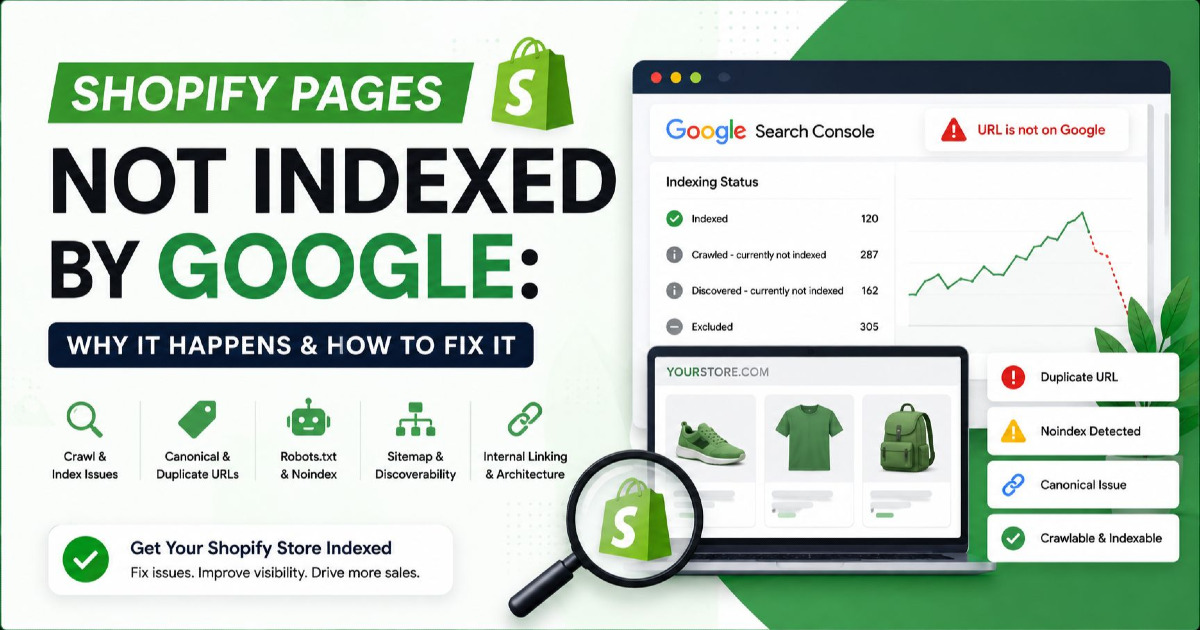
| Technical indexability issue | The page may have noindex, wrong canonical, robots block, or rendering issue. | Check URL Inspection, canonical, robots, sitemap, and rendered HTML. |
For a page already under “Crawled, currently not indexed,” rewriting should not only make the article longer. It should make the page more focused, less generic, more useful, and clearly different from other pages on the site.
How to Measure Local SEO
Local SEO should be measured by visibility, profile actions, website leads, calls, direction requests, bookings, and revenue-quality enquiries.
Do not measure local SEO only by keyword rankings. A local business needs customer actions.
| Metric | What It Shows | Where to Check |
|---|---|---|
| Search impressions | How often website pages appear in Google Search. | Google Search Console |
| Website clicks | How many users visit the website from organic search. | Google Search Console and GA4 |
| Profile calls | How many users call from Business Profile. | Google Business Profile performance |
| Direction requests | How many users ask for directions. | Google Business Profile performance |
| Form enquiries | How many users submit local website forms. | GA4, CRM, form tracking |
| WhatsApp clicks | How many users start WhatsApp conversations. | GA4 events or GTM tracking |
| Bookings | How many users schedule appointments or visits. | Booking tool, CRM, call tracking |
| Lead quality | Whether enquiries match the right service and location. | CRM or sales follow-up data |
For service businesses, a lead from the wrong location or wrong service may not be useful. Measure quality, not only quantity.
Local SEO Checklist
A local SEO checklist should verify Google Business Profile accuracy, website local pages, reviews, citations, local links, schema, tracking, and indexability.
- Use the real business name in Google Business Profile.
- Choose the most accurate primary category.
- Add relevant secondary categories only.
- Keep address, phone number, hours, and website URL accurate.
- Add real services and service descriptions.
- Add real photos of the office, team, work, products, or facility.
- Ask real customers for reviews without incentives.
- Reply to reviews professionally.
- Create local pages only when they provide unique value.
- Avoid copied city pages with only the location name changed.
- Add local proof such as reviews, photos, projects, or area details.
- Keep NAP details consistent across important platforms.
- Build relevant local links and mentions.
- Add LocalBusiness schema where suitable.
- Track calls, forms, WhatsApp clicks, bookings, and direction requests.
- Check Search Console for indexed and non-indexed local pages.
- Review Google-selected canonical for important local pages.
- Use one clear CTA that matches the page intent.
When Should You Get Help With Local SEO?
You should get help with local SEO when your business appears weak in Google Maps, your local pages are not indexed, competitors rank above you, or your website traffic does not turn into local enquiries.
Local SEO becomes more complex when a business has multiple services, branches, city pages, reviews, citations, technical issues, and competition in Maps and organic search.
Professional help is useful when:
- Your Google Business Profile is verified but not visible for important searches.
- Your local landing pages are crawled but not indexed.
- Your competitors have stronger reviews, pages, links, or local proof.
- Your business has multiple locations or service areas.
- Your website has duplicate city pages.
- Your local traffic does not generate calls, forms, WhatsApp leads, or visits.
For strategy, audits, technical fixes, local pages, and long-term organic growth, explore SEO Services. If you want to learn how local SEO works through practical sessions, visit SEO Training in Surat.
FAQ About Local SEO
What is local SEO?
Local SEO is the process of improving a business’s visibility in Google Search and Google Maps for searches related to a location, nearby service, or service area.
How does Google rank local businesses?
Google says local ranking is mainly based on relevance, distance, and prominence, which help Google find the best local match for a user’s search.
Is Google Business Profile enough for local SEO?
No. Google Business Profile is important, but local SEO also needs website pages, reviews, citations, local links, schema, tracking, and useful local content.
Why is my business not showing in Google Maps?
Your business may not show because of weak relevance, wrong category, distance, low prominence, incomplete profile, weak reviews, policy issues, or stronger competitors.
Why are my local pages crawled but not indexed?
Local pages may be crawled but not indexed when they are thin, duplicate, generic, weakly linked, missing local proof, or technically unclear.
Should I create separate pages for every city?
Create separate city pages only when each page has unique service value, real local proof, relevant FAQs, and a clear reason to exist.
Do reviews help local SEO?
Reviews help users trust and compare businesses, and they can support local prominence when they are genuine, relevant, and managed professionally.
Are citations still important for local SEO?
Citations help business data consistency and trust, but they work best with a strong Google Business Profile, useful website pages, reviews, links, and local proof.
What is the difference between local SEO and normal SEO?
Normal SEO focuses on organic visibility across search topics, while local SEO focuses on searches connected to a place, service area, business location, or nearby need.
How do I measure local SEO success?
Measure local SEO by Search impressions, Maps visibility, calls, direction requests, website clicks, forms, WhatsApp clicks, bookings, visits, and lead quality.
Final Takeaway
Local SEO works when a business clearly proves what it offers, where it serves, why users should trust it, and how customers can contact or visit it.
Do not treat local SEO as only keyword placement or Google Business Profile posting. Build relevance through accurate categories and service pages. Build distance clarity through correct address, service areas, and local landing pages. Build prominence through reviews, citations, links, photos, mentions, and real business proof.
If a local SEO page is crawled but not indexed, make it more useful, more specific, more locally grounded, and less similar to other pages. Google has already crawled it. The page needs a stronger reason to be indexed.