I have audited Google Ads accounts for builders and Real estate developers across Mumbai, Pune, Surat, Ahmedabad, and Bangalore. The problems are almost always the same. High click volume. Reasonable cost per lead on paper. And a site visit rate so low that the sales team has stopped trusting the leads entirely.
The builder's conclusion is usually that Google Ads does not work for real estate. My conclusion, after looking at the actual account structure, the keyword strategy, the landing page, and the CRM data, is almost always different. Google Ads works. The campaign does not.
This guide is not a beginner's introduction to Google Ads. It is written for builders, developers, and channel partners who are already spending on Google Ads or planning to, and who want to understand what separates campaigns that produce site visits from campaigns that produce phone numbers that nobody picks up.
If you want to understand the platform fundamentals before going deeper, start with my overview of Google Ads and come back here for the real estate application.
Why Most Builder Google Ads Campaigns Fail Before the First Lead Arrives
The failure point in most real estate Google Ads campaigns is not where builders think it is. They assume the problem is the ad copy, the budget, or the keyword bids. In practice, the failure is structural and it happens before a single rupee is spent on clicks.
A campaign built on the wrong keyword architecture will attract the wrong buyers regardless of how well the ads are written. A campaign sending traffic to a homepage will waste 70 to 80 percent of its budget regardless of how competitive the bids are. A campaign without conversion tracking will never know which keywords are producing site visits and which are producing time-wasters. These are structural decisions made in the first hour of account setup, and they determine the campaign's ceiling for its entire run.
The three structural failures I find in almost every builder audit are:
Wrong keyword match type strategy. Builders or their agencies run broad match on generic terms like "flats in Mumbai" or "property investment India." These terms look relevant. They are not. Broad match in 2026 means the campaign will serve ads for searches that Google's algorithm considers semantically related, which in property can mean anything from "interior design for small flats Mumbai" to "property management companies India." Every one of those clicks burns budget that should have reached a buyer searching "3BHK Kandivali West under 1.5 crore ready possession."
No message continuity between ad and landing page. The ad says "2BHK in Wakad from INR 75 lakh." The landing page opens with the developer's logo, a tagline about excellence, and a gallery of all their projects from across Pune. The buyer who clicked with a specific expectation has arrived at a page that answers a different question. The bounce is immediate. The budget is gone.
No downstream conversion measurement. The campaign tracks form submissions. It does not track which form submissions became answered calls. It does not track which answered calls became site visits. It does not track which site visits became bookings. The campaign optimises toward the cheapest form submission, not the most valuable buyer. Over time, the algorithm learns to find people who fill forms. Not people who buy flats.
What a Google Ads Audit for a Real Estate Campaign Actually Reveals
When a builder approaches me after spending three to six months on Google Ads with disappointing results, the audit process follows a specific sequence. Each step reveals a different layer of the problem, and the combination tells me exactly where the budget is being lost and why the site visits are not materialising.
Step 1: The Search Terms Report
The search terms report shows the actual queries that triggered the campaign's ads and generated clicks. This is the most revealing document in any Google Ads audit. I look for two things immediately: the percentage of spend going to queries that are clearly irrelevant to property buying, and the specific irrelevant query patterns that are consuming the budget.
In a recent audit of a mid-segment builder in Thane, the search terms report showed that 34 percent of the campaign's monthly spend over four months had gone to queries including: "property management software India," "real estate agent salary Mumbai," "property tax calculator Maharashtra," "flat rent Thane monthly," and "2BHK interior design ideas." None of these searchers were buying property. All of them filled the campaign's reporting with impressions, clicks, and form submissions that looked like activity but produced no site visits.
The fix is not complicated. It requires reading the search terms report weekly, adding irrelevant queries to the negative keyword list systematically, and tightening match types on the core keywords. This work takes two to three hours per week. Most campaigns never receive it.
Step 2: The Quality Score Breakdown
Quality Score is Google's assessment of how relevant the keyword, ad, and landing page combination is to the searcher. A low Quality Score increases the cost per click for the same ad position, meaning the campaign pays more per click than a competitor with identical bids but better Quality Score. For real estate campaigns in high-CPC markets like Mumbai and Bangalore, a Quality Score gap of 3 to 4 points between a well-managed and a poorly managed campaign can represent INR 40 to INR 80 difference in cost per click. At 1,500 clicks per month, that is INR 60,000 to INR 1,20,000 per month in premium paid for poor account structure.
The three components of Quality Score are expected click-through rate, ad relevance, and landing page experience. Landing page experience is consistently the lowest-scoring component in builder campaigns because most property landing pages fail Google's own assessment of whether they deliver a satisfying experience for the specific query that triggered the ad.
Step 3: The Conversion Funnel Drop-Off Analysis
I map every step from impression to booking and calculate the conversion rate at each stage. A typical unoptimised builder campaign looks like this: 100,000 impressions produce 1,500 clicks at 1.5 percent CTR. Those 1,500 clicks produce 90 form submissions at 6 percent form conversion. Those 90 form submissions produce 54 answered calls at 60 percent answer rate. Those 54 answered calls produce 8 interested buyers at 15 percent interest rate. Those 8 interested buyers produce 3 site visits. Three site visits from 100,000 impressions and INR 1,50,000 in spend is INR 50,000 per site visit.
Once the funnel is mapped with actual numbers, the intervention point becomes obvious. In this example, the critical failure is the 6 percent form conversion rate from clicks to submissions, which means 94 percent of the budget that produced a click produced no lead. A landing page optimised for this specific campaign achieves 12 to 18 percent form conversion, which doubles to triples site visit output from the same spend without touching the campaign itself.
Step 4: The Lead Quality Distribution
I ask the sales team to categorise the last 100 leads from the campaign into four buckets: invalid (wrong number, no response after 3 attempts), unqualified (budget mismatch, wrong location, not actually buying), qualified but not ready (genuine buyer, not ready for a site visit yet), and site visit converted. In most unaudited campaigns, the distribution looks roughly like this: 25 percent invalid, 45 percent unqualified, 20 percent qualified-not-ready, 10 percent site visit. That means 70 percent of leads are waste before they reach the sales team's qualification stage. The campaign is being judged on cost per lead when 70 paise of every rupee spent on that lead is generating nothing useful.
Google Ads Campaign Strategy for Real Estate: How I Build It From Scratch
When I build a Google Ads campaign for a builder or developer in India, I start with three questions that most agencies skip entirely because the answers require understanding the project's sales reality rather than just the advertising platform.
The first question is: what does the sales team's ideal lead look like? Not the average lead. Not the most common lead. The lead that the sales team can consistently convert to a site visit and subsequently to a booking. The answer is usually specific: a buyer with a household income above a certain threshold, searching within a 15 to 20 km radius of the project, with a buying timeline of 3 to 6 months rather than "someday," and with a specific configuration and budget that matches what the project offers. The campaign strategy starts from this ideal buyer profile and works backward to the keywords, audiences, and ad formats that reach this profile specifically.
The second question is: what is the sales team's actual site visit conversion rate from different lead sources? This number, which most builders either do not track or track inaccurately, determines the CPL target for the campaign. If the sales team converts 1 in 10 Google leads to a site visit, and the average project booking requires 8 site visits to produce one booking, and each booking generates INR 8 lakh in revenue, then the maximum viable CPL is INR 10,000 at break-even. A campaign producing leads at INR 800 each sounds excellent until the lead-to-site-visit conversion reveals that those INR 800 leads produce site visits at INR 8,000 each, which is close to the break-even threshold rather than the profitable return the INR 800 CPL implied.
The third question is: what is the project's actual geographic and demographic buyer profile from past sales? Builders who have sold inventory before have data: where did their buyers come from, what was their typical profession, income bracket, family composition, and how far in advance of possession did they typically book? This historical buyer profile is the most reliable audience signal for Google Ads targeting because it represents the real buying behavior of this project's actual customer rather than a demographic assumption.
Keyword Architecture for Real Estate Campaigns
I organise real estate keywords into four strategic tiers, each serving a different buyer intent and requiring different bid strategy and landing page treatment.
Tier 1 is exact-match project and location-specific keywords. These are the highest-intent, highest-converting keywords in any property campaign. Examples for a 2BHK project in Wakad, Pune: [2BHK Wakad under 80 lakh], [ready possession flats Wakad Pune], [RERA registered apartments Wakad 2025]. These keywords have lower monthly search volume and higher CPC than generic terms, but they produce buyers who have already decided on the location and configuration. They convert to site visits at 2 to 4 times the rate of generic terms.
Tier 2 is phrase-match location-modified property searches. These reach buyers who have identified the location but are comparing projects. Examples: "flats in Wakad for sale," "residential projects Wakad Pune 2026," "upcoming projects Hinjewadi Wakad." These require more work from the landing page to qualify the buyer because the intent is less specific, but they reach a significantly larger audience than Tier 1.
Tier 3 is phrase-match micro-area and infrastructure proximity searches. Indian property buyers, particularly in metro markets, frequently search by proximity to infrastructure: metro stations, IT parks, schools, or business districts. Examples: "flats near Hinjewadi IT Park," "apartments near Pune metro phase 2," "2BHK near Baner Balewadi highway." These searches represent buyers who have decided what infrastructure proximity they need and are researching which projects fit that requirement.
Tier 4 is competitor project and developer name targeting. Buyers searching a specific competing project have already made multiple pre-qualifying decisions: they want to buy in that location, at roughly that price point, in that configuration. A well-crafted comparison ad appearing for a competitor's branded search intercepts a fully pre-qualified buyer. The ethics of competitor keyword targeting are sometimes questioned by developers, but it is standard practice across the industry and represents some of the highest site visit conversion rates in any property campaign.
Bid Strategy by Campaign Stage
The bid strategy choice in Google Ads determines how the platform's algorithm allocates budget across keywords, audiences, and time periods. For real estate campaigns, I use a specific bid strategy progression based on the campaign's data maturity.
In the first 30 days, I run Manual CPC or Enhanced CPC on Tier 1 and Tier 2 keywords with conservative bids. The objective at this stage is not volume. It is data collection. I am learning which specific keywords produce leads that the sales team qualifies as genuine, which ad copy variations produce higher CTR, and which landing page elements produce higher form conversion. Making volume-focused bid strategy decisions without this foundation produces rapid spend with slow learning.
After 30 to 45 days and a minimum of 30 to 50 conversions in the account, I introduce Target CPA bidding. At this stage, the algorithm has enough data to identify which user behaviors predict a form submission and can begin optimising bid adjustments toward those signals automatically. The Target CPA is set based on the actual CPL observed in the manual phase, initially at 10 to 15 percent above the observed CPL to give the algorithm room to operate.
After offline conversion tracking is implemented and the algorithm has 30 or more site visit conversion events to learn from, I shift to Target CPA bidding toward the offline site visit conversion rather than the online form submission. This is the most significant performance improvement in any mature property campaign. The algorithm stops optimising toward form submissions and starts optimising toward the user and keyword profile that produces buyers who actually show up.
Performance Max for Builders: My Honest Assessment
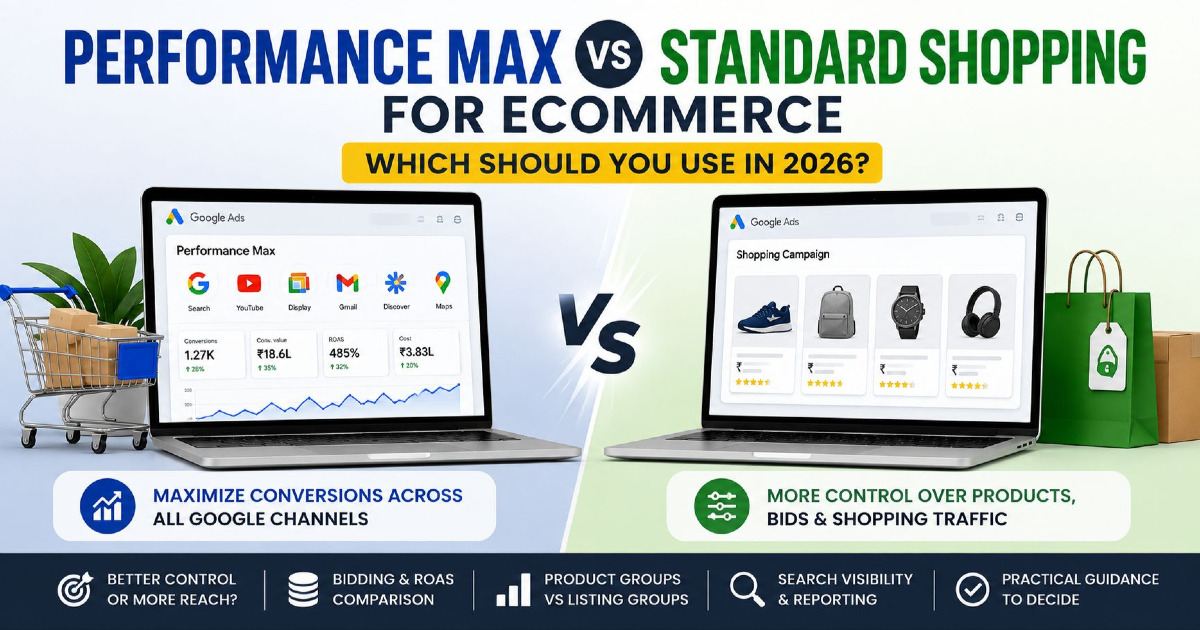
Performance Max campaigns are promoted aggressively by Google because they simplify campaign management and drive higher spend across all of Google's ad inventory. They also generate leads for property developers. What they do not reliably generate, without significant account structure investment, is the quality of lead that converts to site visits efficiently.
The fundamental problem with PMax for real estate is that it optimises toward the conversion event it has data for. Most builder accounts have form submissions as their primary conversion event. PMax gets very good at finding people who will fill property enquiry forms. This is not the same as finding people who will visit a site and buy a flat. The algorithm cannot distinguish between a buyer who fills a form from genuine purchase intent and a person who fills a form because they were curious after seeing a YouTube pre-roll. Both register as conversions. Both get credited. The CPL looks good. The site visit rate is abysmal.
I use PMax for builder campaigns only after three conditions are met. First, the Search campaign has accumulated at least 60 days of data and 50 or more conversions. Second, offline conversion tracking is implemented and site visit events are being fed back into the account. Third, the asset group creative, including images, videos, headlines, and descriptions, is specific to the project and audience rather than generic property marketing content. PMax running on generic creative with no audience signals and no offline conversion data is one of the fastest ways to spend a large property marketing budget with very little to show for it in the sales team's pipeline.
Landing Pages for Real Estate Google Ads: What I Require Before Any Campaign Goes Live
I will not run a Google Ads campaign for a builder without a dedicated project landing page. This is not a preference. It is a campaign requirement that I hold as a non-negotiable condition for any engagement. The single most common reason property campaigns produce high click volume and low site visits is that the traffic is being sent to a website rather than a landing page, and websites are built for brand exploration while landing pages are built for decision confirmation.
The buyer who clicked a Search ad for a specific project has already made a micro-commitment: they found the ad compelling enough to click. At the moment they arrive on the landing page, they have a specific set of questions they need answered before they will submit an enquiry. What is the actual price range? What configuration is available? What is the possession timeline? Is this developer RERA registered? Can I see actual photos of the project or model flat, not just architectural renders? What is the exact location and what is nearby?
A landing page that answers all of these questions above the fold on mobile, includes a short form (name and phone only) or a WhatsApp button, and displays the RERA registration number prominently will convert 12 to 20 percent of clicks into enquiries. A homepage that requires the buyer to navigate to find this information will convert 3 to 6 percent. The difference in campaign output from these two conversion rates, with identical ad spend, is the difference between 18 leads and 72 leads from the same INR 1,00,000 monthly budget.
Here is what I look for on every landing page before approving a campaign launch:
The headline must directly match the ad that brought the buyer to the page. If the ad says "3BHK in Thane West from INR 85 lakh," the landing page headline must immediately confirm that this is where to find 3BHK flats in Thane West in that price range. Not a generic developer slogan. Not an award the developer won. The specific project and price point the ad promised.
The form or WhatsApp CTA must be visible on mobile without scrolling. More than 70 percent of property ad traffic in India arrives on mobile. A form buried below project details, location maps, and amenity lists is a form that the majority of mobile visitors never reach. The contact mechanism goes above the fold. Always.
The RERA number must be displayed prominently. Post-2017, a significant percentage of urban Indian property buyers validate RERA registration as a credibility check before enquiring with an unfamiliar developer. A landing page without a visible RERA number loses a measurable number of high-intent buyers who are sophisticated enough to look for it and cautious enough to require it.
Authentic photography of the actual project, not exclusively architectural renders, builds buyer trust more effectively than any amount of copywriting. I specifically look for construction progress photographs, model flat photographs, and location photographs. Renders communicate promise. Photographs communicate reality. Buyers who have been burned by developers who did not deliver on promises read the distinction immediately.
CRM Integration: The Part Most Builders Ignore Until It Costs Them
A Google Ads campaign without CRM integration is a lead generation system with a hole in the bucket. The leads arrive. Some get followed up. Some sit in an inbox. Some get lost between team members. The campaign keeps generating leads. The sales team keeps being inconsistent. The builder concludes the leads are bad. The leads are not bad. The system is broken.
I insist on CRM integration as a campaign condition because it is the only way to answer the two questions that determine whether a property Google Ads investment is actually working: which keywords are producing leads that convert to site visits, and which leads have been contacted, with what outcome, within what timeframe?
The minimum CRM workflow I recommend for builder campaigns: every form submission from the landing page posts automatically to the CRM via webhook within 60 seconds of submission. The assigned sales executive receives an SMS and WhatsApp notification immediately. The buyer receives an automated WhatsApp response within 2 minutes with the project brochure and a message that a sales representative will call shortly. The sales executive calls within 10 minutes. The call outcome is recorded in the CRM within 30 minutes of the call.
This workflow sounds basic. In practice, fewer than 20 percent of builder campaigns I audit have anything close to this implemented. The rest rely on email notifications (which arrive when someone checks email), shared WhatsApp groups (where leads get buried under other messages), or manual spreadsheet entries (which happen when someone remembers). Speed to lead is the most decisive variable in property lead conversion. A buyer who submitted a form and received a call in 8 minutes converts to a site visit at 4 to 6 times the rate of a buyer who submitted a form and received a call 4 hours later.
Offline Conversion Tracking: Connecting Clicks to Bookings
Offline conversion tracking is the single most technically impactful improvement available to any mature real estate Google Ads campaign. It is also the improvement that most agencies and most builders have never implemented, because it requires coordination between the advertising platform, the website, and the CRM that most setups have not designed for.
Here is the problem it solves. Google Ads can track online events: form submissions, phone clicks, WhatsApp button taps. What it cannot see, without a specific technical implementation, is what happened after the form was submitted. Did the buyer answer the call? Did they qualify as a genuine buyer? Did they visit the site? Did they book? The campaign's bidding algorithm optimises toward the events it can see. If it can only see form submissions, it optimises toward form submissions, which means it finds the audience profile most likely to fill a property enquiry form, not the audience most likely to show up for a site visit.
The implementation requires capturing the Google Click ID (GCLID) from every form submission and storing it alongside the lead record in the CRM. When a site visit or booking is recorded against a specific lead in the CRM, the associated GCLID is exported to Google Ads as an offline conversion event. Google Ads then attributes that site visit or booking back to the original keyword, ad, and audience that generated the lead. Over 30 to 60 days of this data flowing back into the account, the bidding algorithm begins shifting budget toward the specific keywords, audiences, and time periods that actually produce buyers rather than form fillers.
In accounts where I have implemented offline conversion tracking and shifted bidding to Target CPA toward site visits rather than form submissions, the site visit rate from the same budget improves by 35 to 60 percent within 60 days. The CPL (cost per form submission) typically increases during this period as the algorithm stops pursuing cheap form submissions from low-quality audiences. The cost per site visit decreases significantly. This is the correct trade-off for a property business where the metric that matters is site visits and bookings, not form submissions.
Google Ads Budget for Real Estate in India: What the Numbers Actually Mean
Budget conversations for real estate Google Ads in India almost always start with the wrong question. Builders ask "how much should I spend?" The right question is "how many site visits do I need per month, and what is the system capable of producing per rupee?" These two questions produce very different budget answers and very different expectations.
The budget-to-site-visit calculation for a properly structured campaign in a competitive market works through four numbers. The average CPC in the target market for Tier 1 and Tier 2 intent keywords. The expected click-to-form conversion rate from a well-built landing page. The lead-to-site-visit conversion rate from the sales team's historical data. And the number of site visits the project needs monthly to meet its booking targets.
A builder in Surat targeting mid-segment buyers for a 2BHK and 3BHK project priced between INR 55 lakh and INR 90 lakh faces a CPC environment of INR 25 to INR 55 for Tier 1 and Tier 2 keywords. A well-built landing page converts 15 percent of clicks into form submissions. The sales team converts 1 in 8 qualified leads to a site visit. The project needs 12 site visits per month to sustain its sales targets. Working backward: 12 site visits at 1 in 8 conversion requires 96 qualified leads. At a 15 percent form conversion rate, 96 leads requires approximately 640 clicks. At INR 40 average CPC, 640 clicks requires INR 25,600 in ad spend. Add management and the total acquisition system cost for 12 site visits per month in this market is approximately INR 38,000 to INR 45,000 per month. That is a very different number from the INR 5,00,000 per month budgets that large builders in Mumbai must allocate for equivalent site visit volumes in a market where average CPC is INR 120 to INR 180.
For a detailed breakdown of what Google Ads management costs in India, including how management fees are typically structured and what different budget levels should expect in terms of campaign management depth, see my analysis at Google Ads management fees in India.
| City | Typical CPC Range (Intent Keywords) | Expected CPL (Well-Managed Campaign) | Market Difficulty |
|---|---|---|---|
| Mumbai (MMR) | INR 90 to INR 220 | INR 1,500 to INR 3,500 | Very High: portal dominance plus heavy developer competition |
| Bangalore | INR 65 to INR 170 | INR 1,200 to INR 2,800 | High: Whitefield, Sarjapur, and Hebbal corridors especially competitive |
| Delhi NCR | INR 75 to INR 190 | INR 1,300 to INR 3,200 | High to Very High: Gurugram luxury market commands premium CPCs |
| Pune | INR 50 to INR 140 | INR 900 to INR 2,200 | High: Wakad, Baner, Hinjewadi, Kharadi corridors competitive |
| Ahmedabad | INR 28 to INR 75 | INR 500 to INR 1,400 | Medium: strong ROI opportunity relative to metro markets |
| Surat | INR 22 to INR 60 | INR 400 to INR 1,100 | Low to Medium: growing market, relatively low auction competition |
| Hyderabad | INR 45 to INR 120 | INR 800 to INR 2,000 | Medium to High: Gachibowli and Kondapur corridors most competitive |
Retargeting for Real Estate: Staying Visible During the 60-Day Decision Window
Property buyers in India do not make purchase decisions from a single ad exposure. The average residential buyer in metro India researches across 45 to 90 days before committing to a site visit. During that 45 to 90 day window, they are simultaneously looking at four to eight competing projects, receiving calls from multiple developers, and discussing options with family members whose preferences may not align with their initial shortlist. A developer who appears once in a Search result and then disappears from the buyer's awareness for the remaining 80 days of their consideration period has introduced themselves and then stepped aside while competitors maintained presence.
Retargeting keeps the developer visible across the buyer's consideration period without requiring the buyer to search again. The mechanism is simple: every visitor to the project landing page who does not submit a form is added to a retargeting audience. For the next 30 to 60 days, that buyer sees Display ads and YouTube pre-rolls for the project while they browse other websites, watch real estate videos, and use Google's other properties. Each impression is a fraction of the cost of the original Search click because the audience has already been identified as interested and the targeting is not competitive in the same way as the original auction.
The retargeting creative should not repeat the original ad. A buyer who visited the landing page already knows the project exists and the basic details. The retargeting creative should advance the conversation: construction progress from last month, a specific amenity that differentiates the project, a limited-time site visit offer, or a third-party validation like a media mention or award. Each creative variation tests a different reason to return and enquire, and the one that produces the highest retargeting click rate tells me what the most compelling additional proof point is for buyers in this specific market at this stage of consideration.
Google Ads vs Meta Ads for Indian Real Estate: When to Use Each
The question I get asked most often by builders who are planning their first paid advertising investment is whether to start with Google Ads or Meta Ads. My answer depends on the project type and the sales team's actual capacity to handle leads of different quality profiles.
Google Ads reaches buyers who are actively searching. They have typed a specific query into Google that indicates they are in the market for what the project offers. The lead generated from a Tier 1 intent keyword is a buyer who has declared their location preference, configuration preference, and in many cases their budget range through the search query itself. The sales team's job with this lead is confirmation and invitation, not education and qualification. These leads require faster response but less persuasion.
Meta Ads reaches buyers who are browsing social media without any declared purchase intent at that moment. They see a project ad while scrolling through Instagram or Facebook. The creative needs to be compelling enough to stop the scroll and generate enough curiosity to produce a form submission or a WhatsApp enquiry. The lead generated is earlier in the consideration process. They are more likely to be in the awareness phase: interested but not yet comparing projects actively. These leads require more education and nurturing before they are ready for a site visit conversation.
For a developer launching a project in a location where buyers are actively searching, Google Ads delivers faster qualified leads at higher CPL. For a developer building awareness of a project in a new micro-market where search volume is limited, Meta Ads builds the buyer awareness pool from which future Google searches will emerge. The most effective strategy for most mid-to-large projects combines both: Meta Ads builds the audience and Google Ads captures them when they move from awareness to active comparison.
| Factor | Google Ads | Meta Ads |
|---|---|---|
| Buyer intent at contact | High: buyer is actively searching for properties | Low to Medium: buyer is in passive consumption mode |
| Typical lead-to-site-visit rate | 8 to 15 percent with correct campaign structure | 4 to 8 percent; higher volume compensates in most markets |
| CPL in mid-segment metro market | INR 1,000 to INR 2,500 | INR 300 to INR 1,000 |
| Creative requirement | Text-dominant; headline and description quality critical | Visual-dominant; video and image quality determines CPL significantly |
| Best starting point | Projects in areas with established search demand | New micro-markets with low organic search volume |
| Response time requirement | Within 10 minutes for optimal conversion | Within 5 minutes; social leads have shorter attention windows |
| Retargeting capability | Strong: Display and YouTube retargeting audiences | Very Strong: Custom Audiences and Lookalike Audiences |
RERA Compliance in Google Ads: What Builders Must Know in 2026
RERA requirements for real estate advertising are not a grey area and they apply to digital advertising including Google Ads. Every builder running Google Ads for a RERA-registered project in India needs to understand three specific compliance requirements that affect campaign setup and landing page design.
The RERA registration number must be displayed on all marketing materials, which Google's ad policy and RERA's own guidance both extend to digital advertising landing pages. A landing page for a RERA-registered project that does not display the registration number is non-compliant regardless of how the project is promoted. Including the RERA number on the landing page also serves a commercial purpose: buyers who are educated about RERA use its presence or absence as a trust signal before deciding whether to enquire.
Possession date claims in ad copy and landing pages must match the RERA-registered possession date. Advertising an earlier possession than the RERA registration indicates is a compliance violation that exposes the developer to consumer complaints through RERA's grievance mechanism. In ad copy where space is limited, using "possession by [RERA registered date]" or removing possession date claims entirely and relying on the landing page for this information is the safest approach.
Price claims in ads must reflect prices that are actually available. Advertising "from INR X" where INR X is the price of a configuration that has already sold out, or where significant additional charges bring the actual entry price significantly above the advertised figure, violates both Google's advertising policies and RERA's pricing transparency requirements. Google enforces this through ad policy violations that can result in account suspensions during active launch campaigns, which is a commercial risk beyond the regulatory exposure.
Common Mistakes I See in Builder Google Ads Accounts
After auditing accounts across the country, the same mistakes appear so consistently that I have come to treat their presence as the expected finding rather than the exception. Here they are in the order I typically encounter them, ranked by the revenue they cost the builder.
No offline conversion tracking. The campaign tracks form submissions. Site visits and bookings are invisible to the algorithm. The bidding optimises toward cheap form fills from the wrong audience. This single missing implementation is responsible for more wasted property ad spend in India than any other technical failure I encounter. The fix takes 4 to 6 hours to implement correctly. Most accounts have been running for months or years without it.
Sending all traffic to the homepage or main website. The builder has a good website. The campaign sends everyone there. The website is designed to serve existing visitors, answer brand questions, and showcase the full portfolio. None of that is what a buyer who just clicked a specific project ad needs to see in the first 5 seconds. Dedicated landing pages for each campaign and each configuration type are non-negotiable.
Broad match keywords without a negative keyword strategy. The search terms report is checked monthly at best, quarterly in most accounts. The negative keyword list has 10 to 20 entries that were added during initial setup and never updated. The campaign continues spending 20 to 40 percent of its budget on irrelevant searches. The fix is a weekly 30-minute search terms review. Most campaigns never receive it.
Performance Max launched before Search data exists. The builder or agency wants maximum reach from day one. PMax is launched without audience signals, without conversion data, and with generic real estate creative. The algorithm has no quality signal to optimise toward. It finds clicks cheaply. Those clicks are from the wrong people. The budget is large. The site visits are non-existent.
No speed-to-lead system. The CRM receives the lead. Nobody is notified immediately. The sales executive calls 3 to 5 hours after submission. The buyer has moved on. This is not a campaign problem. It is a lead handling problem. But it destroys the campaign's ROI just as effectively as any structural campaign error, and the builder concludes Google Ads does not work rather than identifying the actual bottleneck.
What to Expect From Google Ads Management for Real Estate
When I manage Google Ads for a property developer, the engagement is structured around outcomes rather than activities. The builder is not paying for weekly reports and monthly calls. They are paying for a campaign architecture that produces site visits at a target cost, a landing page that converts traffic to enquiries, a tracking setup that measures what actually matters, and ongoing optimisation that improves performance over time rather than maintaining the status quo.
In the first 30 days, the primary work is infrastructure: campaign structure, keyword architecture, negative keyword list, landing page review and recommendations, conversion tracking setup, CRM integration verification, and baseline performance data collection. In months two and three, the work shifts to optimisation: bid strategy adjustment based on actual conversion data, search terms cleanup, ad copy testing, landing page element testing, and audience refinement. From month four onward, the work is scaling: identifying which campaign elements are producing the best site visit economics and allocating more budget toward them, while introducing supplementary campaign types (PMax, retargeting, YouTube) that expand reach without compromising the quality baseline established in the Search campaign.
For an overview of what Google Ads management services include and how engagements are typically structured, see my Google Ads management services page. For builders who want to understand their current campaign's specific problems before committing to ongoing management, I offer a campaign audit that produces a prioritised list of fixes with expected impact for each one.
When You Need a Specialist, Not an Agency
There is a meaningful difference between hiring a Google Ads agency to manage your property campaigns and working with a specialist who has built, managed, and audited real estate campaigns specifically across Indian markets.
An agency runs campaigns across dozens of industries with a team where account managers may rotate between categories. The person reviewing your property campaign last month may be reviewing a D2C fashion brand this month. The keyword strategy for a luxury apartment in Mumbai is not the same as the keyword strategy for a software subscription service, and the experience required to build it effectively is not interchangeable.
A specialist who works specifically in real estate Google Ads in India understands micro-market CPC dynamics, knows which negative keywords to add from the first day rather than discovering them from months of wasted spend, understands the RERA compliance requirements that affect ad copy, knows the specific trust signals that convert Indian property buyers on landing pages, and has the campaign benchmarks from comparable projects to evaluate whether performance is genuinely acceptable or merely looks acceptable because the reporting metrics are misleading.
For builders and developers who want to understand what a genuine expert brings to a real estate Google Ads engagement, see my Google Ads expert page for a detailed description of what that expertise looks like in practice and how engagements are typically structured.
If you are ready to talk about your specific project, your current campaign performance, or whether Google Ads is the right channel for your next launch, the best starting point is a Google Ads consulting conversation where we look at the numbers together and identify exactly where the current system is losing you site visits.
Frequently Asked Questions: Google Ads for Real Estate in India
Do Google Ads actually work for builders in India?
Google Ads works for builders when the campaign, landing page, lead response system, and CRM are built as a connected acquisition system. The builders who report it does not work are almost always sending traffic to a homepage rather than a dedicated landing page, measuring cost per form submission rather than cost per site visit, and calling leads hours after submission rather than minutes. These are system problems, not platform problems. Well-structured campaigns consistently produce qualified site visits in every major Indian property market.
What is a realistic cost per lead for real estate Google Ads in India?
For mid-segment residential projects in Tier 1 cities, INR 900 to INR 2,200 per lead represents efficient performance from a properly structured Search campaign. Mumbai and Delhi NCR markets with very high CPC typically see INR 1,500 to INR 3,500. Ahmedabad and Surat markets produce leads at INR 400 to INR 1,400. CPL must always be evaluated alongside lead-to-site-visit conversion rate. A INR 600 CPL that produces site visits at INR 12,000 each is less efficient than a INR 1,200 CPL that produces site visits at INR 7,000 each.
Should I start with Search campaigns or Performance Max?
Always start with Search campaigns. Search gives you control over which queries trigger your ads, produces the cleanest lead quality data, and builds the conversion history that Performance Max needs to optimise intelligently. Running PMax as the first campaign, without conversion data, audience signals, or a negative keyword foundation, consistently produces high click volume and low site visit rates. Use Search for the first 60 to 90 days, then introduce PMax once you have real conversion data for it to learn from.
How long does it take for a real estate Google Ads campaign to optimise?
A properly structured Search campaign typically reaches stable performance within 30 to 45 days if conversion tracking is correctly implemented from launch. Automated bidding strategies require a minimum of 30 to 50 conversions to exit the learning phase. Campaigns launched with broad match keywords, no conversion tracking, or generic landing pages often appear to be in learning for months because the algorithm is not receiving the quality signal it needs to converge on an efficient audience profile. The learning period is as much about correct initial setup as it is about time.
Is Performance Max worth it for property developers?
PMax is worth it when three conditions are met: the Search campaign has 60-plus days of data and 50-plus conversions, offline conversion tracking is feeding site visit events back into the account, and the asset group creative is specific and high quality. Without these conditions, PMax often produces lower site visit rates than Search despite higher lead volume. The algorithm optimises toward what it can measure, and if it can only measure form submissions, it finds cheap form submissions rather than quality buyers.
What should a real estate landing page include for Google Ads traffic?
A property landing page for Google Ads traffic must include: a headline that directly matches the specific ad (not a generic developer tagline), the project name, location, configuration details, and price range clearly above the fold on mobile, a short form (name and phone only) or WhatsApp button visible without scrolling, RERA registration number prominently displayed, authentic project photography (not only renders), possession timeline, and at least one genuine buyer testimonial or a construction progress photo. Pages missing any of these elements are losing enquiries from buyers who would have submitted if the information they needed was immediately available.
How important is speed to lead for property Google Ads campaigns?
Speed to lead is one of the two or three most decisive variables in real estate lead conversion, alongside lead quality and sales team qualification skill. A property buyer who submits a form is simultaneously researching multiple projects. The developer whose sales team calls within 8 to 10 minutes of form submission consistently gets the first conversation. Leads contacted within 5 minutes convert to site visits at 4 to 6 times the rate of leads contacted after 2 hours. An automated WhatsApp response within 2 minutes of form submission, while the sales team prepares to call, keeps the buyer engaged and sets the tone of the relationship before the first human conversation.
What is offline conversion tracking and do I need it?
Offline conversion tracking connects what happens after a form submission, specifically site visits and bookings, back to the original Google Ads click that generated the lead. Without it, the campaign's bidding algorithm can only optimise toward form submissions, which means it learns to find people who fill forms rather than people who buy flats. With offline conversion tracking feeding site visit events back into the account, the algorithm learns which keywords, audiences, and ad variations produce buyers who actually show up. In accounts where I have implemented this correctly, site visit rates from the same budget improve by 35 to 60 percent within 60 days. It is the single highest-impact technical implementation available to any mature property campaign.
How do I know if my current Google Ads campaign is underperforming?
Check these four numbers against the benchmarks in this guide: your click-to-form conversion rate from landing page analytics (below 8 percent indicates a landing page problem), your form-to-answered-call rate from CRM data (below 55 percent indicates a lead quality or response speed problem), your lead-to-site-visit rate (below 8 percent in most markets indicates a combination of targeting and follow-up problems), and your search terms report for the last 30 days (more than 15 to 20 percent of spend going to clearly irrelevant queries indicates a keyword management problem). If three or more of these numbers are below benchmark, the campaign needs a structural audit rather than incremental optimisation.